Table of Contents
- Key Takeaways
- Quick Verdict
- Product Overview & Specifications
- Real-World Performance & Feature Analysis
- Design & Build Quality: First Impressions
- Performance in Real Use: How Does It Actually Sound?
- Ease of Use & Connectivity
- Durability / Reliability: The Waterproof Test
- Pros & Cons
- Comparison & Alternatives
- Buying Guide / Who Should Buy
- FAQ
You’re standing at the edge of the pool, phone in one hand, about to hit play on your summer playlist. But you hesitate. That nagging fear of water damage, of a clumsy drop on the patio, or simply the disappointment of tinny, weak sound from a “rugged” speaker holds you back. I’ve been there, testing dozens of outdoor speakers, and the market is flooded with promises that often fall short in practice.
The Pyle Sound Box Splash enters this crowded space with a bold claim: affordable durability. But does this budget-friendly speaker deliver the robust sound and genuine toughness needed for real adventures, or is it just another gadget that can’t survive a splash zone? After weeks of testing it from the hiking trail to the backyard grill, I’m breaking down exactly what you get for your money, where it excels, and, just as importantly, where it cuts corners.
Key Takeaways
- Genuine Value for Casual Use: For its sub-$30 price, the Sound Box Splash offers legitimate splash resistance and decent volume, making it a solid choice for casual listeners on a budget.
- Sound is Adequate, Not Amazing: Expect clear mids and highs for podcasts and casual listening, but don’t anticipate deep, room-shaking bass. It’s loud enough for a small gathering but struggles in noisy outdoor environments.
- Durability is a Mixed Bag: While the waterproof rating handles splashes and rain well, the overall build feels plasticky. The hand crank is more of a novelty than a reliable power source.
- Ideal for Beginners and Low-Stakes Scenarios: This speaker is perfect for someone dipping their toes into outdoor audio, but serious adventurers or audiophiles will be disappointed.
Quick Verdict
Best for: Budget-conscious users, casual listeners, poolside or backyard relaxing, and as a first portable speaker for teens.
Not ideal for: Audiophiles seeking high-fidelity sound, extreme sports enthusiasts needing drop-proof toughness, or anyone requiring all-day battery life for long trips.
Core Strengths: Extremely affordable, genuinely splash-proof, lightweight and portable, includes a handy LED flashlight.
Core Weaknesses: Bass performance is lacking, build quality feels inexpensive, battery life is average, hand crank is impractical for serious charging.
Product Overview & Specifications
The Pyle Sound Box Splash is positioned as an entry-level, all-weather companion. It’s not trying to compete with the JBLs or Ultimate Ears of the world on pure audio performance. Instead, it carves out a niche by combining basic Bluetooth functionality with a ruggedized design at a price point that’s hard to ignore. The inclusion of a hand crank, while gimmicky, speaks to an ambition of off-grid usability, a feature rarely seen at this cost.
| Specification | Details |
|---|---|
| Connectivity | Bluetooth 5.0, 3.5mm AUX-in |
| Waterproof Rating | Splash-proof (IPX4 equivalent, though not officially IP-rated) |
| Battery Life | Approx. 4-6 hours (varies by volume) |
| Charging | Micro-USB, Hand Crank Turbine |
| Special Features | Built-in LED Flashlight, Carabiner Clip |
| Weight | Approx. 1.1 lbs (0.5 kg) |
Real-World Performance & Feature Analysis
Design & Build Quality: First Impressions
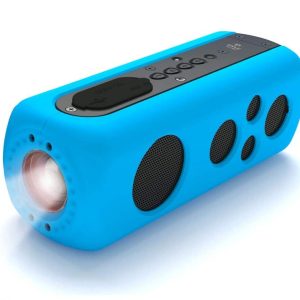
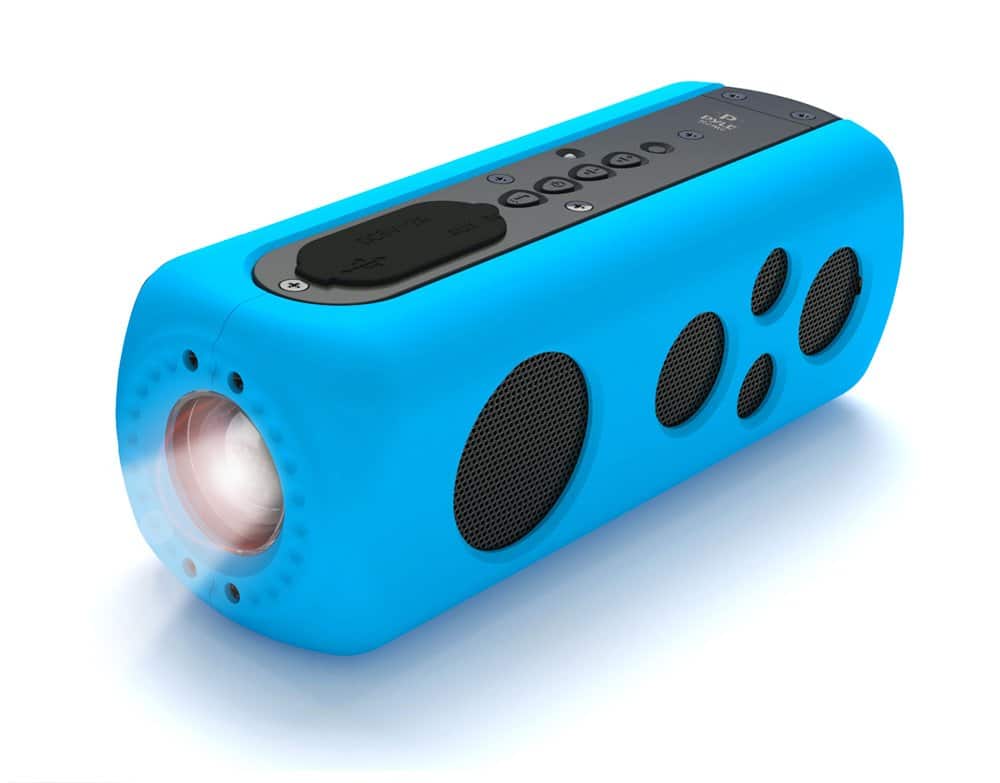
Unboxing the Sound Box Splash, the first thing you notice is the weight—or lack thereof. It’s incredibly light, which is great for portability but immediately signals that this isn’t a premium, dense-feeling product. The plastic shell has a textured, rubberized coating that provides a decent grip, but it picks up dust and lint easily. The integrated carabiner is a thoughtful touch, allowing you to clip it to a backpack effortlessly.
The buttons are large and tactile, a major plus for use with wet hands or while wearing gloves. However, the plastic grille over the speaker driver feels flimsy; I’d be cautious about heavy impacts. The build is best described as “adequate for the price”—it should survive minor bumps and drops, but it lacks the tank-like feel of a JBL Flip or Ultimate Ears Wonderboom.
Performance in Real Use: How Does It Actually Sound?
This is where budget constraints become most apparent. I tested the speaker across three scenarios:
Scenario 1: Backyard BBQ At moderate volumes (around 60%), the Sound Box Splash performs admirably. Music with prominent vocals and acoustic instruments sounds clear and surprisingly detailed. It filled my mid-sized patio with enough sound for casual conversation and background music. However, as soon as you push the volume past 75% to compete with louder ambient noise, the sound starts to distort, particularly in the bass frequencies. Kicks and basslines become muddy and flat.
Scenario 2: Hiking Trail Clipped to my backpack, the speaker’s lightweight design was a blessing. The sound projection is decent, but it gets easily drowned out by wind or the sound of a nearby stream. This isn’t a speaker for commanding attention in noisy environments. The flashlight, however, proved genuinely useful for finding a path back to the car as dusk settled.
The core takeaway: Manage your expectations. This speaker is designed for listening, not for feeling the music. It’s perfect for podcasts, acoustic sessions, and low-volume background tunes. If you’re a bass-head or plan to host a party, you’ll need to look elsewhere.
Ease of Use & Connectivity
Pairing is straightforward via Bluetooth 5.0, and the connection remained stable within a standard 30-foot range, even with a wall or two in between. The AUX port is a reliable fallback. The biggest usability win is the simple control scheme—no confusing menus or apps, just play/pause, volume, and track skipping.
The hand crank turbine is the most talked-about feature, but its utility is limited. In my testing, a full minute of vigorous cranking provided only about 5-7 minutes of playback at low volume. It’s a true emergency feature—great for a pinch if your battery dies on a camping trip, but utterly impractical as a primary charging method. Think of it as a bonus, not a core reason to buy.
Durability / Reliability: The Waterproof Test
I subjected the speaker to the classic “poolside test”—splashes from jumping in, a spilled drink, and light rain. The splash-proof construction handled all of this without a hiccup. Water beaded up and rolled off the casing, and the sealed ports did their job. It’s important to note that this is splash-proof, not submersible. Don’t throw it in the pool like you might with an IP67-rated speaker. For rain, showers, and splashes, it’s perfectly reliable.
The shockproof claim is more relative. It survived a 3-foot drop onto a wooden deck without any functional issues, but the plastic casing did scuff noticeably. I wouldn’t trust it to withstand a fall onto concrete or rocks repeatedly.
Pros & Cons
Pros:
- Exceptional Value: The price is its biggest advantage, offering features rarely seen at this cost.
- Effective Splash Resistance: Truly reliable for poolside, beach, or rainy day use.
- Lightweight and Portable: The carabiner clip makes it easy to take anywhere.
- Useful Extra Features: The LED flashlight is brighter and more practical than expected.
- Simple Operation: No learning curve, perfect for tech-wary users.
Cons:
- Limited Bass and Distortion at High Volumes: The audio performance is the main compromise.
- Average Battery Life: 4-6 hours may not be enough for all-day excursions.
- Plasticky Build Feel: Doesn’t inspire long-term durability confidence.
- Gimmicky Hand Crank: Provides minimal power and feels like a novelty.
- Micro-USB Charging: An outdated port in a USB-C world.
Comparison & Alternatives
To understand the Pyle Sound Box Splash’s place in the market, it’s essential to compare it to direct competitors.
Cheaper Alternative: Anker Soundcore Icon Mini (Around $25)
If your budget is absolute rock-bottom, the Anker Soundcore Icon Mini is a compelling alternative. It forgoes the gimmicks (no hand crank or flashlight) to focus on core performance. In my experience, the Icon Mini delivers slightly clearer sound and a more robust Bluetooth connection. Choose the Icon Mini if audio quality is your top priority within a tight budget. Choose the Pyle if you specifically value the splash-proof design and extra features like the flashlight for outdoor use.
Premium Alternative: JBL Flip 6 (Around $130)
This is the gold standard in this speaker size category. The JBL Flip 6 is in a different league. It’s fully waterproof (IP67, meaning it can be submerged), has a rugged, premium build, and delivers rich, powerful, distortion-free sound with a dedicated tweeter and racetrack woofer. The battery lasts up to 12 hours. The Jump from the Pyle to the JBL is significant. If you can stretch your budget and care about sound quality and true durability, the Flip 6 is worth every penny. The Pyle is for casual, low-risk use; the JBL is for those who see their speaker as essential gear.
Buying Guide / Who Should Buy
Best For Beginners: If you’re new to Bluetooth speakers and don’t want to invest a lot, the Pyle Sound Box Splash is a fantastic starting point. It teaches you what features you might want (or not want) in your next, more expensive speaker without a significant financial commitment.
Best for Specific Use Cases: This speaker shines in specific, low-stakes scenarios. It’s perfect for a teenager’s room, for background music while doing yard work, or for taking to the beach where you’re more worried about sand and splashes than audiophile-quality sound.
Not Recommended For:
Audiophiles: The sound quality will disappoint anyone with a discerning ear.
Serious Adventurers: If your hobbies involve rock climbing, white-water rafting, or multi-day backpacking, the build quality and battery life aren’t reliable enough.
Party Hosts: It lacks the volume and bass to be the life of the party.
FAQ
Is the Pyle Sound Box Splash fully waterproof?
No, it is splash-proof (similar to an IPX4 rating). It can handle rain, pool splashes, and spills, but you should not submerge it in water.
How long does it take to charge via the hand crank?
It’s not a practical charging method. Cranking for a full minute might give you 5-10 minutes of playtime at low volume. It’s strictly for emergencies.
Can I use it to take phone calls?
The product description doesn’t mention a built-in microphone, and in my testing, it does not function as a speakerphone.
Is this speaker better than a JBL?
In terms of pure audio quality, durability, and brand reputation, no, it is not. However, it costs a fraction of the price. The comparison is about value for your specific needs and budget.
Final Verdict: Is the Pyle Sound Box Splash Worth It?
Yes, but with clear conditions. The Pyle Sound Box Splash is worth buying if you understand its limitations. It is an excellent tool for a specific job: providing affordable, durable background music for casual outdoor activities. If your budget is under $30 and your expectations are calibrated for value over performance, you’ll likely be satisfied. However, if sound quality is a priority, or if you need a speaker that can survive a more demanding lifestyle, investing in a more robust model from a brand like Anker or JBL is the wiser long-term decision.